

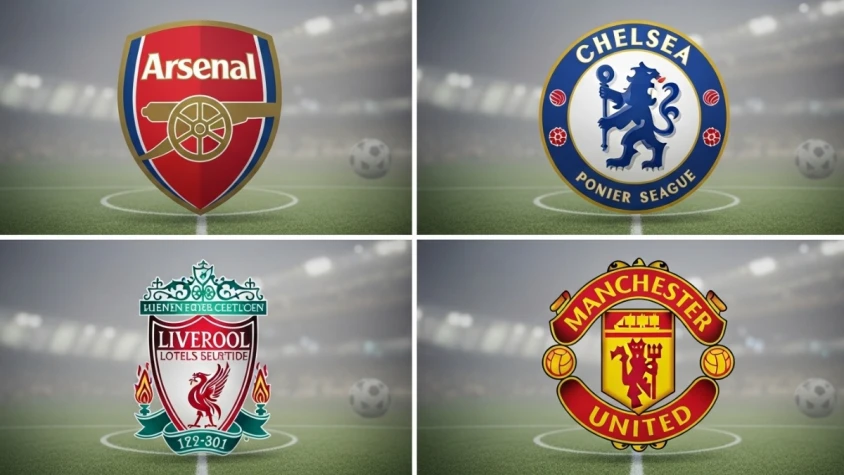
The Original Big Four: A Historic Hierarchy
Between 2004 and 2009, the Big Four dominated the top four of the Premier League, with Everton in 2005 being the only occurrence of a club outside this elite group finishing in the top four during that period. Arsenal, Chelsea, Liverpool, and Manchester United represented the pinnacle of English football – a quartet that combined historic success, financial muscle, and European pedigree.
From 2005 to 2012, the Big Four clubs appeared in seven of eight Champions League finals, with Liverpool, Manchester United, and Chelsea each winning one title, while Arsenal finished as runners-up in 2006. This was an era of unparalleled dominance.
The Evolution to the Big Six
Following an acquisition by Abu Dhabi United Group and subsequent increase in spending funds, Manchester City started to purchase elite players and qualified for the UEFA Champions League in 2011 for the first time in their history, winning the Premier League title in the 2011-12 season.
Tottenham Hotspur, under the management of Harry Redknapp from 2009 to 2012, finished in 4th and 5th place consistently, leading to their addition to the Big Four with Manchester City to form what we now know as the Big Six.
The Financial Dominance
While not an official designation, clubs in this group have typically accounted for at least half of the total annual revenue generated by Premier League clubs since 2004. In 2021, the Big Six clubs' average spending on transfers was £50.9 million, more than twice the amount spent by any other club in the league.
Over the past decade, 74% of all European places went to the Big Six. Access to the Champions League has been even more restricted, with 91% of qualifications secured by these clubs.
Challengers Emerging
Since around 2023, there have been discussions about potential successors to the Big Six. In July 2024, Sky Sports began referring to the Big Seven rather than the Big Six, acknowledging Newcastle United's ascent following their Saudi-backed takeover in October 2021.
Aston Villa's Champions League qualification and Brighton & Hove Albion's consistent top-half finishes have further blurred the lines. The term Big Eight emerged in May 2023, initially including Brighton before Chelsea's resurgence shifted the conversation again.
Current Season Dynamics
In the 2025-26 season, the Big Six have experienced wildly contrasting fortunes. Arsenal lead the table with a six-point advantage, while Liverpool have struggled to find their rhythm under Arne Slot. Chelsea, the FIFA Club World Cup champions, remain the most inconsistent and unpredictable team, capable of beating Liverpool and Spurs but also losing to Brighton and Sunderland.
The data suggests that while the Premier League table has become more volatile and more clubs are gaining occasional access to Europe, consistent participation in the Champions League remains the defining marker of elite status – and one that is still largely controlled by the traditional Big Six.


